Blog

  • Kirkus Review Praises Root-to-Rise

    Kirkus Review Praises Root-to-Rise

    Kirkus Review Praises Root-to-Rise as “Inspiring Guidance for Personal Transformation”

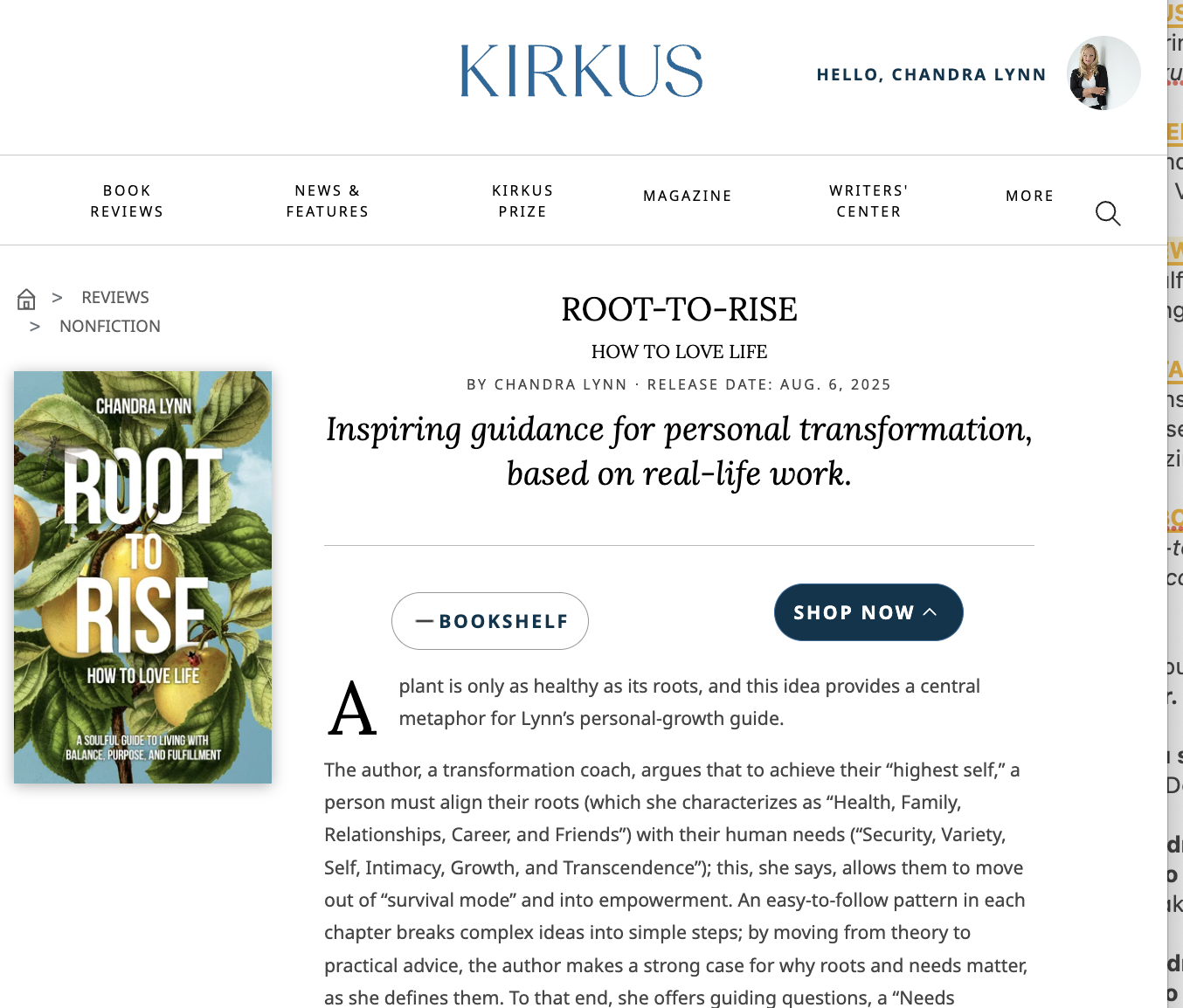
    A plant is only as healthy as its roots—and this idea forms the central metaphor of Root-to-Rise: How to Love Life, a personal-growth guide by transformation coach Chandra Lynn. In a recent Kirkus Review, the book was praised as “inspiring guidance for personal transformation, based on real-life work.”

    In its review, Kirkus Reviews highlights how Root-to-Rise blends clear structure, visual tools, and real client case studies to help readers move out of survival mode and into empowerment.

    A Clear Framework for Personal Transformation

    According to the Kirkus Review, Lynn’s method centers on aligning five life roots—Health, Family, Relationships, Career, and Friends—with six core human needs: Security, Variety, Self, Intimacy, Growth, and Transcendence. When these elements are misaligned, people often feel stuck or depleted. When they are brought into balance, personal growth becomes sustainable.

    Each chapter follows a consistent, easy-to-follow structure that moves from theory into practical application. The review notes that this pattern makes complex emotional concepts accessible and actionable, helping readers understand why their roots and needs matter in everyday life.

    Practical Tools Highlighted in the Kirkus Review

    The Kirkus Review specifically calls out the practical tools woven throughout Root-to-Rise, including guiding questions, a Needs Evaluation, and the Root-to-Rise Map. These tools encourage reflection and help readers identify patterns influencing their choices, relationships, and sense of self.

    Visual elements also play a key role. The Root-to-Rise Infographic—featured at the end of every major section—depicts a woman in tree pose with strong roots and heart-shaped fruit. As the book progresses, this image evolves, reinforcing key lessons and serving as a visual recap of what readers have already learned.

    Real-Life Coaching Stories Bring the Work to Life

    Kirkus also highlights the inclusion of real client case studies drawn from Lynn’s coaching practice. Stories such as The Cost of Avoiding the Truth and The Journey to Self-Worth demonstrate how mapping emotions and meeting internal needs can lead to clarity, confidence, and lasting change.

    These examples ground the Root-to-Rise Framework in lived experience, showing readers how personal transformation unfolds in real life—not just in theory.

    Kirkus Reviews Calls Root-to-Rise “Inspiring Guidance”

    The Kirkus Review concludes by describing Root-to-Rise as “inspiring guidance for personal transformation, based on real-life work.” For readers who feel unfulfilled despite outward success, the book offers a grounded path toward balance, self-trust, and meaningful growth.

    Read the full Kirkus Review

    Visit the Root-to-Rise Book Page

  • Are You a Starter, Finisher, or Sustainer? Learn Your Consistency Style

    Are You a Starter, Finisher, or Sustainer? Learn Your Consistency Style

    Find Your Consistency Style, and Learn How It Can Lead to Big Transformations

    We all love the rush of beginnings.

    That first morning of a new exercise plan when your shoes feel full of promise. The fresh vitamins lined up on the counter. The new journal waiting for your daily entries. The blank social media calendar just waiting to burst with inspired posts.

    Then… life happens.

    The problem isn’t usually that we don’t know what to do. The real challenge is consistency—especially when motivation fades. Consistency quietly asks for our commitment long after the excitement wears off. It lives in the long, unglamorous middle between setting a goal and seeing a result. And that middle can feel like a desert when you’re tired, uninspired, or not seeing progress fast enough.

    If you’ve ever wondered why you struggle to stay consistent, it may have less to do with discipline and more to do with your consistency style.

    Why Consistency Feels So Hard

    Consistency is hard because it demands honesty. It asks you to look at how you actually operate, not how you wish you operated. It invites you to get to know yourself in a deeper way:

    • How do you show up after the initial rush of energy fades?
    • What happens when results come more slowly than you hoped?
    • How do you talk to yourself when you fall off track?

    This is where many people give up—not because they’re lazy or unmotivated, but because they don’t yet have a supportive relationship with consistency.

    Are You a Starter, Finisher, or Sustainer?

    There are three primary consistency styles: starters, finishers, and sustainers. Knowing yours helps you build habits that align with your natural strengths instead of fighting against them.

    Starters

    Starters are fueled by vision, excitement, and the thrill of the new.
    They love big ideas, fresh notebooks, and planning sessions. That first week of a new workout plan or content calendar? Pure joy. But when the buzz wears off, they can lose interest and start chasing the next new thing.

    Finishers

    Finishers find energy in the satisfaction of completion.
    They love checking the box and closing the loop. Once they’re locked into a project or habit, they take real pride in seeing it through. Their challenge is often getting started in the first place—or pushing through the messy middle.

    Sustainers

    Some people live between those extremes: the sustainers.
    Sustainers build rhythms and systems to keep things moving. Think of the operations manager who makes sure everything happens on schedule, or the friend who never skips leg day. Sustainers don’t rely on inspiration. They rely on infrastructure.

    No style is “better” than another. But understanding your consistency style can help you create a strategy that actually works for you—not against you.

    The Secret Behind Consistency: Structure, Not Mood

    Here’s where real, sustainable progress begins: consistency doesn’t depend on your mood. It’s built on structure.

    Structure might look like:

    • Habits that happen at the same time each day
    • Reminders on your phone or calendar
    • Accountability from a friend, coach, or community
    • A clear “why” that keeps your goal meaningful

    When your goals become part of your daily rhythm, they stop feeling like distant dreams and start becoming part of your identity.

    You drink the vitamins before you forget.
    You post even when you don’t feel inspired.
    You go for a walk because your body needs movement, not because you feel wildly motivated.

    This is consistency without the drama—just quiet alignment between effort and intention.

    When Results Start to Show

    Then something beautiful happens: you see results.

    And the first signs are often subtle:

    • Your mood lifts, even a little.
    • Your energy increases.
    • Your audience or business begins to grow.
    • Your body feels stronger or more grounded.

    Those tiny signals become their own motivation loop. You want to keep going because you can finally see and feel the connection between effort and outcome.

    This is where consistency transforms from a chore into a quiet form of self-respect.

    When You Fall Off Track

    The frustration of inconsistency is real. When we fall off track, the guilt and disappointment often feel heavier than the missed workout or skipped post.

    You might hear thoughts like:

    “I always do this.”
    “I can’t stick with anything.”
    “What’s the point in starting again?”

    This is where many people abandon their goals—not because the goal isn’t important, but because the shame feels too big.

    But you don’t need to start over.
    You just need to begin again.

    Every time you return to your routine, you strengthen not only your results but your resilience. You teach yourself that a missed day is a moment, not a verdict. That you are someone who comes back.

    Redefining Consistency: A Relationship, Not a Rule

    Maybe consistency isn’t about perfection or rigid rules. It’s about relationship.

    Your relationship with time.
    Your relationship with effort.
    Your relationship with the version of you you’re becoming.

    No matter your consistency style—starter, finisher, or sustainer—the bridge between where you are and where you want to be is always built the same way:

    One small, repeated step at a time.

    When you honor those steps with compassion and structure, you don’t just reach more goals. You build a kinder, stronger, more trusting relationship with yourself along the way.

    Join my Substack to get articles in your inbox or catch up on past goodness.

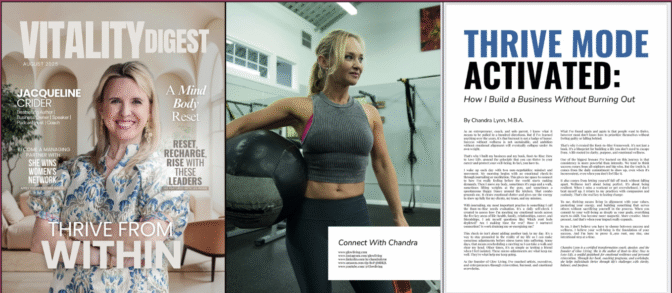
  • Burnout: How to Build a Business and Thrive

    Burnout: How to Build a Business and Thrive

    What Thriving Looks Like Beyond Burnout

    As an entrepreneur, coach, and solo parent, I know the risks of burnout all too well. Burnout is not a badge of honor—success without wellness is never sustainable, and ambition without emotional alignment will eventually collapse under its own weight.

    That’s why I built my business—and my book, Root-to-Rise: How to Love Life—around the principle that you can thrive in your career while preventing burnout. In fact, protecting your well-being is the foundation of lasting success.


    Daily Habits That Prevent Burnout

    Every morning, I start my day with two non-negotiables: mindset and movement.

    • Mindset Check-In: Through journaling or meditation, I connect with how I’m truly feeling before the world starts making demands.

    • Movement: Some days it’s yoga and a walk, other days it’s weightlifting, and sometimes it’s a spontaneous Happy Dance in the kitchen.

    These rituals clear emotional clutter, restore my energy, and help me show up fully for my clients, my team, and my mission—without tipping into burnout.


    The Root-to-Rise Needs Evaluation for Burnout Prevention

    One of my most powerful tools is the Root-to-Rise Needs Evaluation—a daily self-check to assess how I’m meeting my emotional needs across five core areas of life:

    • Health

    • Family

    • Relationships

    • Career

    • Friendships

    I ask myself:

    • Which root feels depleted?

    • Am I making time for rest?

    • Have I nurtured connection?

    • Is my work draining me or energizing me?

    This isn’t another task to add to the list—it’s a burnout prevention system. By catching imbalances early, I can make small adjustments before stress turns into exhaustion.


    Why Prioritizing Yourself Is the Antidote to Burnout

    As the founder of Glow Living, I’ve coached artists, executives, and entrepreneurs through burnout, reinvention, and emotional overwhelm. I’ve seen firsthand how many people want to thrive, but struggle to prioritize themselves without guilt.

    That’s why I created the Root-to-Rise Framework. It’s not just a book—it’s a blueprint for building a life you don’t need to escape from. When your emotional needs are met and your priorities are clear, burnout loses its grip.


    Consistency Over Intensity: A Burnout Recovery Mindset

    One of my biggest lessons is that consistency beats intensity. We often think success comes from all-nighters or huge bursts of effort, but real, burnout-free success comes from showing up daily—even when it’s inconvenient or you don’t feel like it.

    And when you fall off track? Wellness isn’t about perfection—it’s about resilience. If I miss a workout or feel overwhelmed, I return to my practices with compassion, not criticism. This mindset is what keeps me going long-term.


    What Thriving Looks Like Beyond Burnout

    To me, thriving means:

    • Living in alignment with your values.

    • Protecting your energy like a valuable resource.

    • Building something that serves others without sacrificing yourself.

    When you commit to your well-being as deeply as your goals, your creativity, magnetism, and presence expand—and that’s when your impact really grows.

    You don’t have to choose between success and wellness. Avoiding burnout is the key to sustaining both.

  • Rooted in Purpose, Rising in Legacy

    Rooted in Purpose, Rising in Legacy

    Creating a Legacy That Lasts Beyond a Lifetime

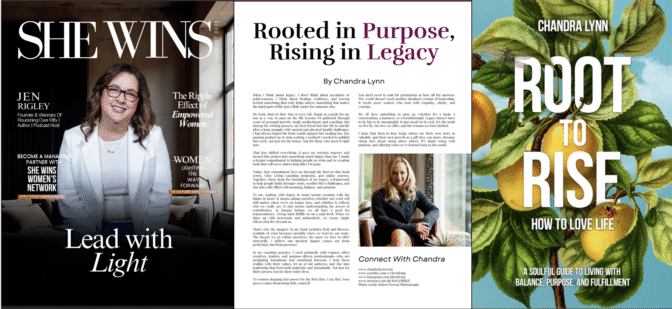
    When I think about legacy, I do not picture accolades or awards. I think about healing, resilience, and leaving something that truly helps others. I want to make the hard parts of life a little easier for someone else.

    My book, Root-to-Rise: How to Love Life, began as a guide for my son so I could pass on the life lessons I gathered through years of personal growth, single motherhood, and coaching. During the writing process my best friend died by suicide after a long struggle with mental and physical health challenges. I had hoped the book would support her healing too. Her passing pushed me to stop waiting. I realized I needed to publish this work for people who need it now.

    Turning Loss into a Lifelong Mission

    That loss shifted everything. It gave my mission urgency and turned this project into something larger than me. I made a deeper commitment to helping people in crisis and to creating tools that will serve others long after I am gone.

    Today, that commitment lives on through the Root-to-Rise book series, Glow Living coaching programs, and online courses. Together, these form the foundation of my legacy: a framework to help people build stronger roots, weather life’s challenges, and rise into a life filled with meaning, balance, and purpose.

    Leading With Legacy in Mind

    To me, leading with legacy in mind means creating with the future in heart. It means asking whether our work will still matter when we are no longer here and whether it reflects who we really are. It also means understanding the power of contribution. As human beings, we feel a need for transcendence. Giving back fulfills us on a soul level. When we show up with generosity and authenticity, we create ripple effects that extend far beyond us.

    That is why the imagery in my book includes fruit and flowers. They symbolize what becomes possible when we tend to our roots. The deeper we go within ourselves, the more we have to offer outwardly. I believe our greatest impact comes from presence, not perfection.

    Helping Others Build Their Legacy

    In my coaching practice, I work primarily with women, often creatives, leaders, and purpose-driven professionals who navigate transitions and emotional burnout. I help them realign with their values, release old patterns, and rise into leadership that feels authentic and sustainable for an entire life, not only a career.

    You do not need to wait for permission or have all the answers to begin living your legacy. The world does not need another idealized version of leadership. It needs people who lead with empathy, clarity, and courage.

    Legacy Is Built in Everyday Actions

    We all have something to pass on. It could be a book, a conversation, a business, or a breakthrough. Legacy does not have to be big to be meaningful. It only needs to be real. It lives in the truth we practice, the love we offer, and the lessons we leave behind.

    I hope Root-to-Rise helps others see their own story as valuable and their personal growth as a gift they can share. Rising does not mean rising above others. Rising with purpose and sharing what we have learned is how legacy grows.

    To women stepping into power for the first time, I offer this: your power comes from being fully yourself. That is where a meaningful legacy begins.

  • The Happy Dance That Saved My Sanity

    The Happy Dance That Saved My Sanity

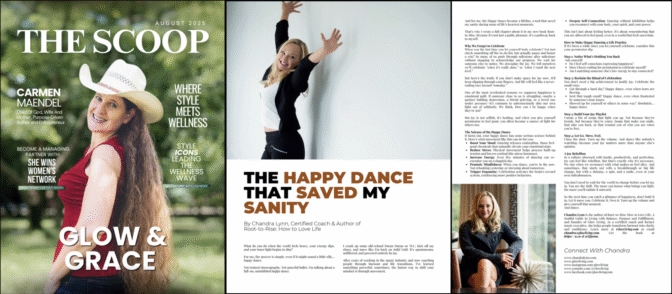
    Featured in The Scoop Magazine

    By Chandra Lynn

    What do you do when the world feels heavy, your energy dips, and your inner light begins to fade? For me, the answer is simple—my happy dance.

    I’m not talking about trained choreography or graceful ballet. I mean a full-on, uninhibited happy dance. I crank up old-school Duran Duran or TLC, kick off my shoes, and move like I’m back on Solid Gold. It’s spontaneous, unfiltered, and powered entirely by joy.

    After years in the music industry and now coaching people through burnout and life transitions, I’ve learned something powerful: sometimes the fastest way to shift your mindset is through movement. And for me, my happy dance became a lifeline during some of life’s heaviest moments.

    Why We Forget to Celebrate

    When was the last time you truly celebrated yourself? Not just checked something off the list, but actually paused to acknowledge the win? Too often, we push through milestones without stopping to appreciate them. We wait for someone else to notice or for “the next level” before we allow joy in.

    But here’s the truth: if you don’t make space for joy now, it will slip away. Life becomes a constant loop of “someday.” One of the most overlooked reasons we suppress happiness is emotional guilt—especially when someone close to us is struggling. But giving yourself permission to feel good isn’t selfish—it’s healing.

    The Science of the Happy Dance

    Your happy dance is more than just fun—it has real benefits:

    • Boosts Mood: Dancing releases feel-good chemicals in the brain.

    • Reduces Stress: Movement helps process built-up tension and lower cortisol.

    • Increases Energy: Even five minutes of dancing can re-energize your day.

    • Promotes Mindfulness: You’re fully present in the moment.

    • Triggers Dopamine: Celebration reinforces positive habits.

    How to Make Happy Dancing a Life Practice

    Step 1: Notice What’s Holding You Back
    Ask yourself:

    • Do I feel self-conscious expressing happiness?

    • Have I been waiting for permission to celebrate?

    • Am I matching someone else’s low energy?

    Step 2: Reclaim the Ritual of Celebration
    You don’t need a reason to justify joy. Celebrate small wins with a happy dance—even through tears or frustration.

    Step 3: Build Your Joy Playlist
    Choose songs that light you up, take you back, or remind you who you are.

    Step 4: Let Go. Move. Feel.
    Dance like nobody’s watching—because they probably aren’t.

    A Joy Rebellion

    In a culture obsessed with hustle and perfection, joy can feel radical. But reconnecting with what makes you feel alive is essential. Your happy dance can be the spark—not a massive life change—that shifts your energy and brightens your day.

    So next time you feel a glimmer of happiness, don’t hold back. Turn up the volume. Own it. And dance.

    Go deeper with Root-to-Rise: How to Love Life, available now on Amazon.

  • Personal Story Into a Book: From Healing to Helping

    Personal Story Into a Book: From Healing to Helping

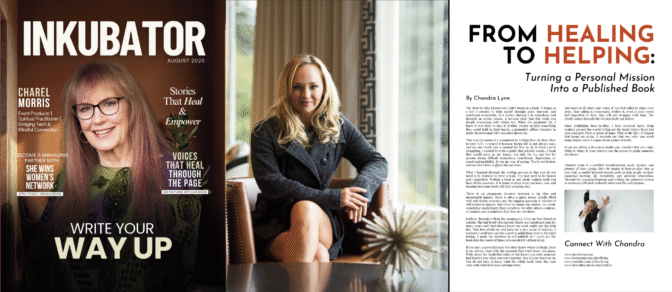
    How I Turned My Personal Story Into a Book That Inspires Others

    By Certified Transformation Coach Chandra Lynn

    From a Healing Tool to a Book Concept

    The Root-to-Rise Framework didn’t begin as a book. It began as a tool I created to help myself through grief, burnout, and emotional overwhelm. As I started sharing it in workshops and through an online course, it became clear the work was resonating deeply with others. When the pandemic hit, I knew it was time to take it further. People needed something they could hold in their hands—a grounded, offline resource to guide them through life’s messiest moments.

    Why I Decided to Write Root-to-Rise

    That was when I committed to writing Root-to-Rise: How to Love Life. I created it because living life is not always easy, and no one hands you a manual for how to do it when you’re struggling. I wanted to write a guide that actually works. A book that would serve as my legacy—not only for my son but for anyone facing difficult transitions, heartbreak, depression, or emotional instability. It was my way of saying, You’re not broken, and you don’t have to figure this out alone.

    Lessons Learned in the Writing Process

    What I learned through the writing process is that you do not need to be fearless to write a book. You just need to be honest and committed. Writing a book is not about waiting until you have all the answers. It is about sharing what you know now and trusting that your truth will help someone else.

    The Messy Middle of a Creative Journey

    There is no glamorous shortcut between a big idea and meaningful impact. There is often a quiet, messy middle filled with self-doubt, rewrites, and the nagging question of whether it will matter to anyone. But when we honor our stories, we create something much bigger than ourselves. We offer others a mirror, a compass, and a reminder that they are not alone.

    A Loss That Changed Everything

    Halfway through writing the manuscript, I lost my best friend to suicide. She had lived with chronic illness and emotional pain for many years, and I had always hoped my work might one day help her. That loss shook me and gave me a new sense of urgency. I realized I could not wait for a perfect publishing deal or the “right” timing. I made the decision to self-publish so I could get the book into the hands of those who needed it without delay.

    Advice for Turning a Personal Story Into a Book

    If you have a powerful personal story but don’t know where to begin, here is my advice: start with the moment that won’t leave you alone. Write about the truth that aches or the lesson you wish someone had handed you when you were hurting. That is your doorway in. You do not have to know what the whole book will look like. Just start with what feels real and important. And most of all, trust your voice. If you feel called to share your personal story and turn it into a book, that calling is meaningful. Follow it. Even if your words feel imperfect at first, they will get stronger with time. The clarity comes through the writing itself, not before.

    The Reward of Sharing Your Truth

    Since publishing Root-to-Rise, I have received notes from readers around the world telling me the book helped them feel seen and gave them a sense of hope. That is the kind of impact that keeps me going. It reminds me that one voice can reach many hearts when it comes from a place of truth.

    If you are sitting with a story inside you, consider this your sign. Write it. Share it. Your journey has the power to guide someone else home.


    About Chandra Lynn

    Chandra Lynn is a certified transformation coach, speaker, and founder of Glow Living. She’s the author of Root-to-Rise: How to Love Life, a soulful personal growth guide to help people navigate emotional burnout, life transitions, and personal reinvention. Through her coaching programs and writing, she empowers women to reconnect with their authentic selves and rise with purpose.

    Discover the book: Root-to-Rise: How to Love Life

  • Understanding Perimenopause & How to Thrive Through It

    Understanding Perimenopause & How to Thrive Through It

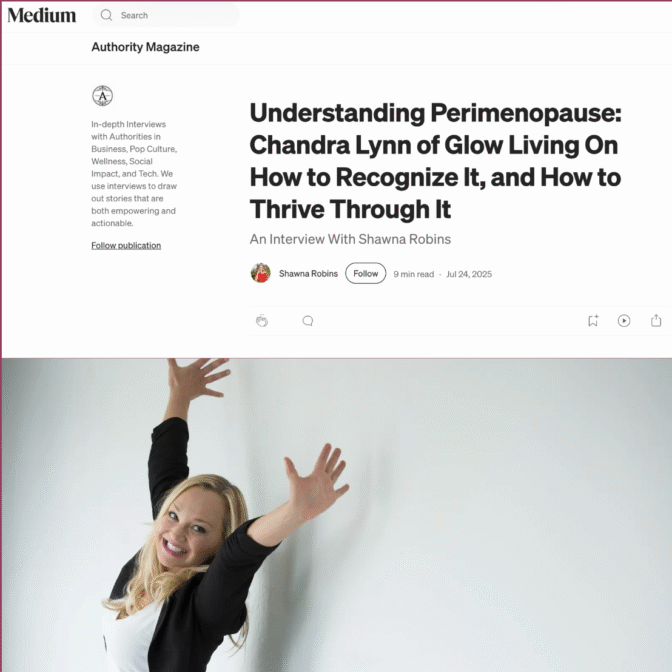
    An Interview With Chandra Lynn, Founder of Glow Living on Understanding Perimenopause

    As featured in Authority Magazine | Written by Shawna Robins

    Perimenopause can feel like a confusing, unpredictable time. One moment you’re managing just fine, and the next, you’re wondering why your emotions feel like a rollercoaster and your body’s usual routines no longer make sense.

    But what if perimenopause was not something to “survive,” but rather an invitation to pause, reflect, and rise into a more powerful version of yourself?

    That’s exactly what transformation coach and author Chandra Lynn wants women to know.

    Founder of Glow Living and creator of the Root-to-Rise personal growth framework, Chandra helps women move through life’s transitions—like perimenopause—with clarity, emotional resilience, and renewed purpose. Drawing from her background leading high-pressure marketing for companies like Apple and Mercedes-Benz, as well as her certification in human needs psychology, Chandra brings both strategic insight and soulful guidance to midlife challenges.

    In this candid conversation, she shares essential truths about perimenopause—and what women can do to thrive during this profound stage of life.

    What Is Perimenopause, Really?

    Chandra explains that perimenopause is the transitional phase leading up to menopause, often lasting several years. While menopause is defined as going 12 months without a period, perimenopause is the hormonal lead-up, often marked by mood shifts, irregular periods, sleep disturbances, and even cognitive changes like brain fog.

    “It’s the wild hormonal rollercoaster before the cycle stops,” she says. “This is the part where women often feel the most off-balance—physically, emotionally, mentally.”

    Early Signs and Common Misconceptions

    Women may begin noticing small but persistent changes:

    • Irregular cycles
    • Sleep disruptions
    • Heightened anxiety or irritability
    • Brain fog or forgetfulness
    • Weight fluctuations

    Yet many dismiss these signs or assume they’re just “getting older.” Chandra wants to debunk the myth that it’s all in your head—or that you just have to tough it out.

    “The emotional and cognitive symptoms are real. You don’t have to suffer in silence. There is support out there,” she says.

    Mental Resilience Starts with Self-Awareness

    Chandra’s Root-to-Rise book and coaching framework teaches women to identify their emotional needs—what she calls our “Hidden Forces.” Through tools like her free Hidden Forces Quiz, women can recognize which unmet needs may be causing tension or dissatisfaction, and begin healing from the inside out.

    One technique she recommends is called The Triad, which helps shift emotional states through posture, focus, and language. It’s especially helpful when your nervous system feels hijacked by hormone-induced anxiety or overwhelm.

    “The key is not pushing through—but tuning in,” she says. “Even small shifts can help you feel more grounded and in control.”

    Lifestyle Changes That Make a Difference

    Chandra emphasizes that perimenopause requires a new level of intentional self-care. While everyone’s body is different, her favorite go-to strategies include:

    • Anti-inflammatory nutrition (cutting processed foods, increasing greens and healthy fats)
    • Strength-based movement (to support metabolism and bone health)
    • Evening wind-down routines to improve sleep (including magnesium and guided meditation)
    • Nervous system regulation through breathwork, stretching, or walks in nature

    She also personally uses bio-identical hormones, as well as herbs like ashwagandha and maca, and recommends talking to a provider about what’s right for you.

    Thriving, Not Just Coping: Chandra’s Top 5 Tools

    When asked what it really takes to thrive through perimenopause, Chandra offers these five powerful pillars:

    1. Self-Awareness Tools

    Her Hidden Forces Quiz helps women identify unmet emotional needs.

    “Once I realized my resentment stemmed from my need for Growth, I could communicate better instead of blame.”

    1. Supportive Rituals

    From walk-and-talks with friends to journaling and daily “needs assessments,” these rituals help create structure and check in with what matters.

    “I ask: Where is my energy needed most today—work, family, myself, or rest?”

    1. A Purpose Filter

    Perimenopause often shakes your identity. Realigning with purpose helps create meaning through the changes.

    “I shifted from burnout to writing my book and supporting other women in transition. That gave me new fuel.”

    1. Safe Community

    Isolation can amplify shame. Chandra recommends joining or creating safe spaces like women’s circles or midlife forums.

    “Sacred connection matters. Vulnerability should be normalized, not hidden.”

    1. Permission to Change

    Letting go of outdated identities and embracing the woman you’re becoming is vital.

    “At 55, I feel more emotionally stable, wise, and confident than ever. And that’s a gift of this stage—not a loss.”

    Final Thoughts: You’re Not Alone

    Chandra’s biggest message? You’re not broken. You’re evolving.

    And evolution requires support, grace, and permission to rewrite the rules of who you are and what you need.

    “We are not our thoughts,” she reminds readers. “Ageism can creep in internally, but we don’t have to subscribe to those beliefs. There’s strength in aging—and in sisterhood.”

    Link to article in Authority Magazine on Medium

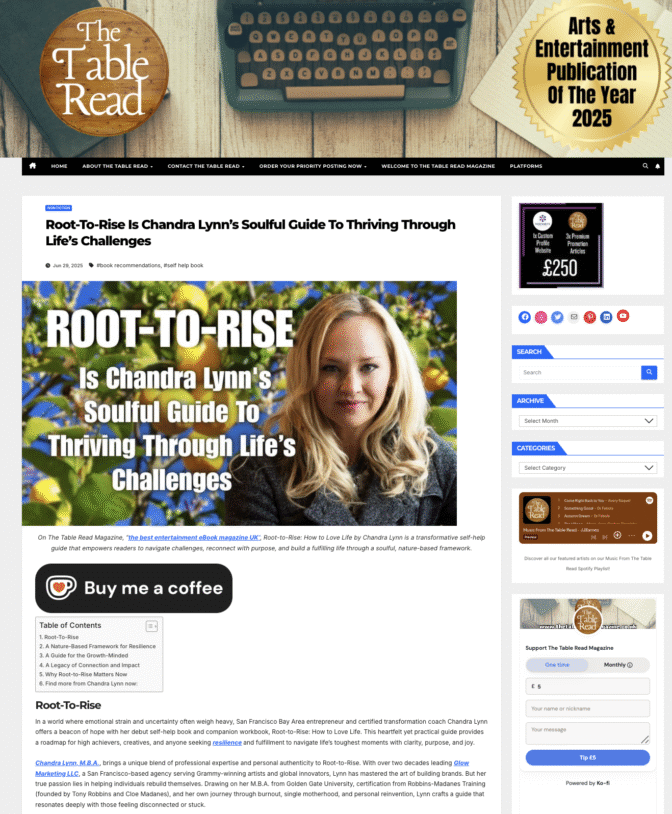
  • Root-to-Rise Book Review from Table Read Magazine

    Root-to-Rise Book Review from Table Read Magazine

    Table Read Magazine Shines a Spotlight on Root-to-Rise
    A soulful guide to thriving through life’s challenges

    I’m excited to share a glowing Root-to-Rise book review from Table Read Magazine. Their piece offers a thoughtful look at Root-to-Rise: How to Love Life. I’m grateful for how clearly they captured the book’s mission and heart.

    In their words, Root-to-Rise is “a soulful guide designed to help people find strength, resilience, and fulfillment amid the messiness of life.” The article explains the story behind the book and the life experiences that shaped it. In addition, it explores the personal growth framework at the center of every chapter.

    The review highlights:

    • How Root-to-Rise grew from a letter to my son into a roadmap for healing, balance, and emotional resilience.

    • The Five Roots and Six Human Needs that help readers build a life of depth and purpose.

    • Why it’s a powerful companion for women in transition, creatives, and seekers ready to rise from struggle into strength.

    As they wrote, “By guiding readers to examine their inner roots—like health, family, and relationships—and clear emotional blocks, Lynn empowers people to reconnect with their authentic selves and rise into a more aligned life.”

    Read the full review here:
    https://www.thetablereadmagazine.co.uk/root-to-rise-is-chandra-lynns-soulful-guide-to-thriving-through-lifes-challenges

    I truly appreciate Table Read Magazine for helping spread the Root-to-Rise movement. Therefore, if this review speaks to you, please share it with friends and colleagues. You can also post your own review on Amazon. As a result, this message can reach more people who need it most.

  • Root-to-Rise Hits #1 on Amazon!

    Root-to-Rise Hits #1 on Amazon!

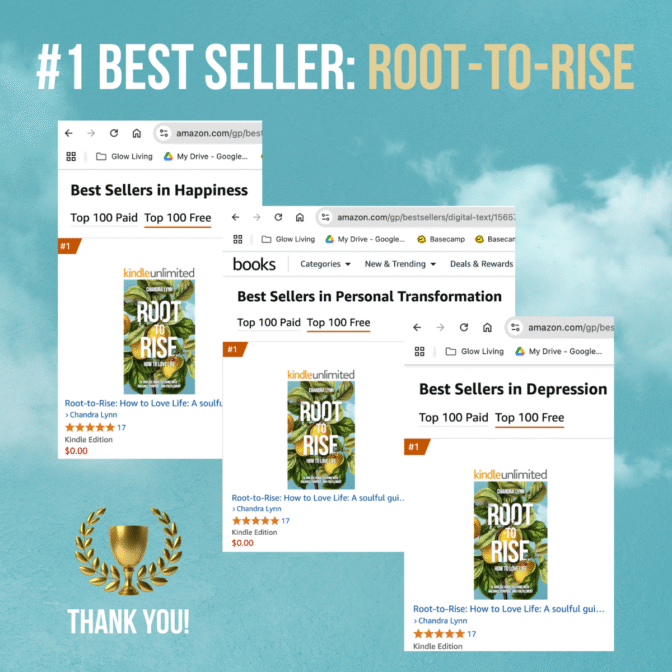
    I’m thrilled to share exciting news—Root-to-Rise: How to Love Life has officially reached #1 on Amazon’s Best Seller list (Free Kindle category) in Happiness, Personal Transformation, and Depression!

    To everyone who downloaded the book, recommended it to a friend, or posted a review—thank you. Your support means more than I can express.


    Why This Book Matters to Me

    Root-to-Rise isn’t just another self-help title. It’s my heart’s work.

    I wrote it as a guide for anyone who has ever felt stuck, burned out, or unsure how to move forward. Inside, emotional resilience, life design, and spiritual growth come together in a grounded, actionable path for transformation.

    At its core is the framework I developed through my own healing journey. It blends the Five Life Root Areas with the Six Emotional Needs to help readers reconnect with themselves and rise stronger than ever.

    This work isn’t only about self-improvement—it’s about self-remembrance. It’s about returning to a version of yourself that feels whole, purposeful, and aligned.


    From Public Success to Personal Transformation

    For years, I helped incredible artists and brands rise publicly through marketing. Eventually, I realized it was time to write something to help us all rise personally.

    This book is for high achievers, creatives, and visionaries—people being asked to do more with less while staying inspired and grounded. Root-to-Rise offers both soulful insight and practical guidance for anyone craving more balance, purpose, and emotional resilience in a fast-moving world.

    My mission is to bridge the worlds of marketing, music, and personal growth so our industry, and everyone in it, can thrive with more heart, clarity, and well-being.


    My Most Vulnerable Offering Yet

    Root-to-Rise is the most personal work I’ve ever created. It’s a lifeline for anyone who has thought, There has to be more than this.

    I wrote it from my deepest truth—sharing both my wounds and my wins. This book comes from the part of me that has broken down and found the courage to rebuild from the roots up.

    Now, it’s ready to stand on its own. I’m trusting the work, trusting the message, and trusting you—the reader. The time for perfecting is over. The time for sharing is now.


    Let’s Rise Together

    I created Root-to-Rise because I believe everyone deserves a life that feels like home to their soul.

    If this message speaks to you, please download the book while it’s still free and share it with someone who might need it—whether that’s a friend in transition, a colleague facing burnout, or even your future self who needs a reminder of what’s possible.

    Get the book and please leave a review on Amazon

    From the bottom of my heart, thank you for helping this dream take root. Let’s keep rising—together.

  • A Candid Conversation on Coping with Grief After Suicide Loss

    A Candid Conversation on Coping with Grief After Suicide Loss

    Root-to-Rise Podcast Interview with Pete A. Turner
    on the Break It Down Show Podcast

    Recently, I had the privilege of returning to The Break It Down Show with my friend and host Pete A. Turner. We had an open-hearted conversation about life, loss, emotional resilience, and my new book, Root-to-Rise: How to Love Life. As we talked, something powerful came through—not only about the book itself, but also about the deeper questions it asks and the human truths we all navigate. In addition, we explored ways to cope with grief after suicide loss.

    This post is for anyone who has felt stuck, questioned their path, or wondered if healing is truly possible. My hope is that it offers insight into Root-to-Rise and, at the same time, gives you permission to explore your own journey—one step, one root, one choice at a time.


    Why I Wrote Root-to-Rise

    Life isn’t easy, and most of us carry emotional wounds—some visible, others silent. Over the years, I’ve worked with global brands and top creatives in the music industry, witnessing both success and struggle. My work as a certified life coach revealed a deeper need.

    We are craving grounding, clarity, and something real to hold onto when everything feels uncertain.

    Root-to-Rise grew out of that need. Initially, it began as a course. Later, it evolved into a workshop. Eventually, it became a book and workbook—a roadmap for reconnecting with what matters most, creating emotional balance, and rising into your potential with intention.


    The Three Questions That Change Everything

    During the interview, I shared three guiding questions that shape the heart of the book:

    1. What do you want?

    2. Why do you want it?

    3. What are you willing to do about it?

    Although these questions may seem simple, answering them honestly can create massive shifts. Many people struggle to express what they truly want. Even fewer connect deeply with the why behind it. Furthermore, willingness often becomes the sticking point.


    Why Willingness Is the Key to Breakthrough

    You can read every self-help book on the shelf, take countless courses, and listen to hours of podcasts. However, unless you apply what you learn—unless you dig in and do the work—nothing changes.

    Willingness isn’t about perfection. Instead, it’s about showing up consistently. It means asking hard questions, sitting with discomfort, and choosing growth over avoidance.

    In Root-to-Rise, I offer more than ideas. Each chapter provides reflections, exercises, and strategies to strengthen the five core roots of life: Health, Family, Relationships, Career, and Friends.


    Honoring the Hard Things

    During our conversation, Pete and I opened up about grief, loss, and the emotional storms that shape us. We both know the pain of losing someone to suicide—and how that kind of loss can unravel your world while redefining your purpose.

    When I lost my best friend of 40 years, I questioned everything. As a coach, I wondered what more I could have done. Even so, I also found clarity: This is why I write. This is why I teach. This is why I rise—to help others find hope in their darkest seasons.

    Grief, especially after suicide loss, strips life down to what truly matters. Root-to-Rise is about rebuilding from that place—not with false positivity, but with depth, truth, and compassion.


    What It Means to Truly Rise

    To rise doesn’t mean “getting over it.” It’s not about bypassing pain or pretending everything is fine. It’s about rooting down to heal and build emotional strength. It involves aligning with your purpose, meeting your needs in healthy ways, and finding your unique path to fulfillment.

    As Pete said during the episode: “Your legacy isn’t something you leave behind—it’s something you’re creating every day.”


    Want to Start Your Journey?

    Grab your copy of Root-to-Rise: How to Love Life (available in Kindle and print editions).

    Take the free Hidden Forces Quiz to discover what emotional needs are silently shaping your choices.

    You can also watch the full conversation with Pete on YouTube or visit The Break It Down Show website.

    Watch the episode: Break It Down Show Interview


    Final Thoughts

    You don’t need to be perfect—you just need to be willing. Be willing to pause, to reflect, to ask different questions. And most importantly, be willing to rise.


  • ✨The Root-to-Rise book is here!

    ✨The Root-to-Rise book is here!

    NEW BOOK ANNOUNCEMENT

    A Soulful Self-Help Guide for Balance and Fulfillment Offers a Roadmap Through Challenging Times

    San Francisco, CA — 2025 — After two decades guiding global brands through her San Francisco Bay Area–based marketing agency, Glow Marketing LLC, entrepreneur and certified transformation coach Chandra Lynn, M.B.A. is now channeling her expertise into something more personal—and more timely.

    As a result of the growing emotional strain many face today, her debut self-published personal growth book and companion workbook, Root-to-Rise: How to Love Life, offers a grounded yet inspiring framework. It helps readers break through internal obstacles, reconnect with purpose, and design a life they truly love—even during times of uncertainty.

    Root-to-Rise book cover

    A Personal Mission to Help Others Rise

    “I’ve helped brands and artists rise publicly. Now I help people rise personally,” says Lynn. “Life can be incredibly challenging—especially in uncertain times. Root-to-Rise is my soulful response to the question many people are quietly asking: How do I love life again when it feels off, stuck, or too heavy to handle?”

    Lynn’s approach combines academic credentials with lived experience. For example, her M.B.A. in marketing from Golden Gate University and certification from Robbins-Madanes Training provide structure. At the same time, her personal journey through burnout, reinvention, single motherhood, and healing gives the book its emotional depth.

    Therefore, the result is a guide that’s both heartfelt and practical. It was created for high achievers, creatives, and anyone seeking emotional resilience and authentic fulfillment.


    Building the Glow Living Platform

    To support this mission, Lynn founded Glow Living, a personal growth company serving women in transition and emotional seekers. What began as a digital hub has evolved into a multi-faceted brand. It now offers books, online courses, coaching, inspirational card decks, and wellness tools.

    Because of this expansion, Glow Living helps people live with clarity, courage, and connection.

    “In a world where anyone can call themselves a coach, credibility matters,” Lynn notes. “People deserve guidance that’s both qualified and compassionate. Traditional publishers wanted celebrity-level followings—but helping people is too important to wait. Consequently, I greenlit my own book to get real, transformative tools into the hands of those who need them.”


    About the Root-to-Rise Book

    Launching as a must-read self-help book for Summer, Root-to-Rise blends human needs psychology, nature-based wisdom, and real-world coaching insights. Readers learn how to strengthen the five essential “roots” of life—health, family, relationships, career, and friendships.

    In addition, the book offers engaging stories, practical exercises, and soulful reflections. Lynn shows how nourishing these roots builds the resilience to rise toward purpose and possibility.

    Early readers have called Root-to-Rise “authentic, empowering, and transformative.” One advance reviewer shared: “The Root-to-Rise metaphor immediately resonated, and Chandra Lynn’s vulnerability in sharing her story made me feel like I was in a conversation with a trusted friend.”

    Learn More

    How to Love Life is available for on Amazon: https://www.amazon.com/dp/B0F3JMBKJL

    For more information, visit: https://glowliving.com/rtrbooks

  • Are You a Sponge or a Bubble?

    Are You a Sponge or a Bubble?

    How to Protect Your Energy From Others

    Throughout the day, we’re constantly interacting with other people’s energy—whether we realize it or not. For sensitive people and empaths, this can lead to emotional overload. That’s why it’s so important to learn how to protect your energy from others.

    When you interact with someone who’s anxious, angry, or just in a bad mood, you have a choice:

    • Absorb their energy like a sponge

    • Or let it bounce off your energetic bubble

    If you’re too open to taking on other people’s energy, it can affect your mood, your outlook, and even your health. You might start to feel serious, heavy, overwhelmed, frustrated, or even depressed—without knowing why.


    ️ Protect Your Energy Before It Affects You

    The best form of energy protection is prevention—don’t let the energy in to begin with. But this is easier said than done, especially for empaths.

    Here are two visual tools you can use:

    1. The Bubble Visualization – Picture a glowing energy bubble around your body. Imagine any negativity bouncing off the bubble without penetrating it.

    2. The Energy Basket – Visualize yourself holding a basket. As someone sends their energy your way, let it fall into the basket instead of your body. When the interaction is over, imagine dumping it out and walking away clear.


    What if You Already Absorbed Their Energy?

    If you already feel affected, it’s time to “wring out the sponge” and clear the energy from your system.

    Here are 10 ways to release toxic energy and reset your inner state:

    1. Journal it out – Reflect on how the experience affected you and what it may have triggered internally.

    2. Burn + release – Write out your ideal outcome as if it already happened. Then burn it as a ritual of release.

    3. Move your body – Exercise to release stress and support your physical system with whole, nourishing foods.

    4. Spend time in nature – Let the beauty of the natural world remind you that life is bigger than the moment you’re processing.

    5. Practice self-care – Refuel your positive energy by giving yourself what you need most.

    6. Ask for help – Whether it’s a therapist, coach, or trusted friend, don’t go it alone.

    7. Spiritual practice – Increase prayer, meditation, breathwork, or whatever grounds your soul.

    8. Create joy – Watch comedies, listen to upbeat music, sing, laugh, dance—inject joy back into your energy field.

    9. Be with your people – Connect with friends or family who uplift and brighten your life.

    10. Cry it out – Let the emotions move through you. Feel + deal = heal. Give it space and a time limit.


    ✨ Your Energy Matters

    Protecting your energy is an act of self-love. The more you protect your own energy, the more positive influence you can have on others. Let yourself be a bubble, not a sponge.

    What are your favorite ways to protect your energy or release negativity?
    Comment below to share your wisdom with the Glow Living community.


    ➕ Want More?

    Check out these related Glow Living articles:

    Special thanks to Kristen Dessange of Sacred Life Circle for her powerful teachings on energy boundaries.

    Pictured: Jessica Alba in Fantastic Four